
Why do road roller tyres use smooth treads?
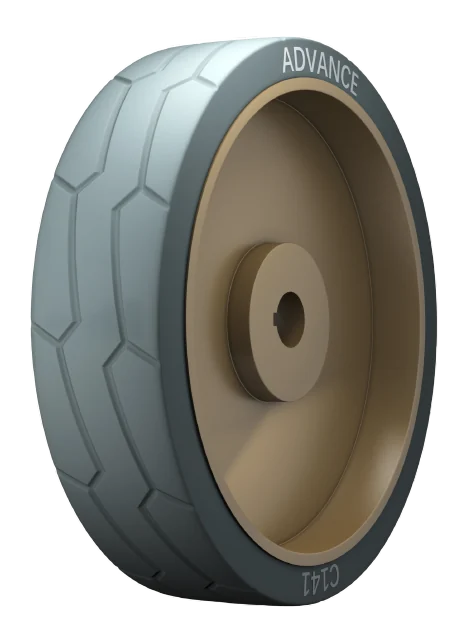
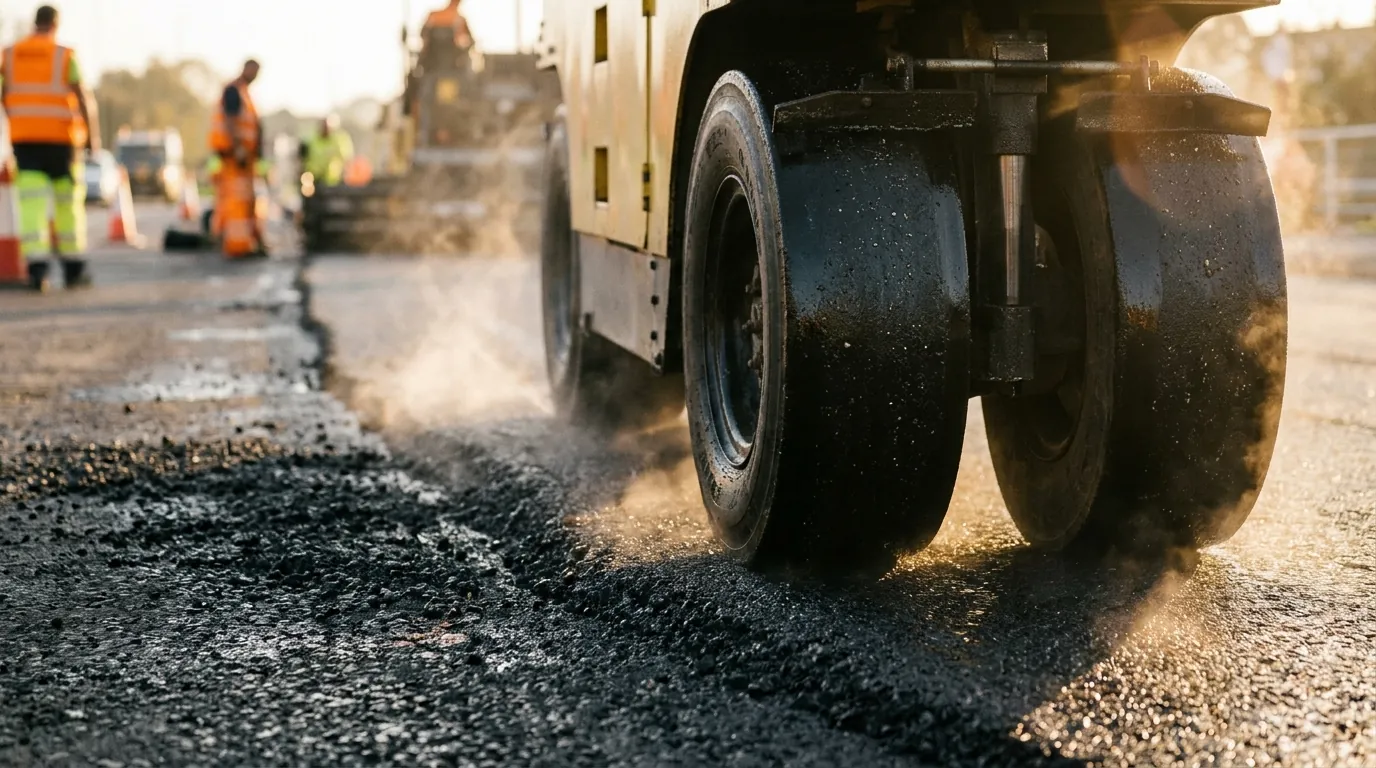
A road roller works by pressing the road surface through a wide contact patch. Block or deep tread patterns leave indentations and disturb the freshly compacted surface, so most roller tyres use a completely smooth tread to maximise contact area and keep the surface flat.
Short answer: asphalt and concrete compaction uses smooth treads; soil or graded aggregate compaction can use a light block pattern for extra traction.
Selecting roller tyres by compaction material
| Compaction material | Tread | Note |
|---|---|---|
| Hot asphalt | Fully smooth | Good heat resistance, leaves no indentations and keeps the surface flat |
| Cement concrete | Fully smooth | A wide contact patch distributes pressure evenly |
| Soil, graded aggregate | Light block pattern | Better grip on loose ground, at the cost of light marking |
| Sand, soft ground | Block pattern | Traction is prioritised over surface flatness |
Roller tyre pressure: adjusted by compaction layer
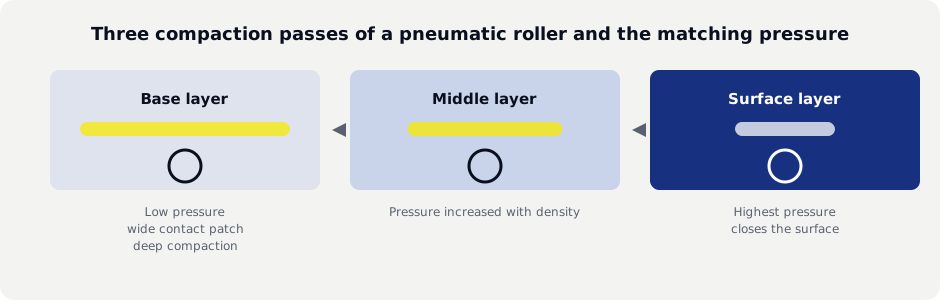
Unlike truck tyres, roller tyre pressure is adjusted for each compaction layer: the first layer needs low pressure for a wide contact patch and deep compaction, and later layers are run at progressively higher pressure to apply greater force and level the surface. This is why pneumatic rollers usually carry an on-board inflation pressure control system.
- First layer (base course): low pressure, wide contact patch, deep compaction.
- Middle layers: pressure increased progressively to suit the required density.
- Final layer: highest pressure to level the surface and achieve surface density.
- Always follow the supervising engineer's instructions: incorrect pressure damages both the road surface and the tyres.
Roller tyre sizes in the range
Roller tyres belong to the bias OTR group and are common in rim sizes from 15 to 24 inch. The table below summarises the specifications available in the range for comparison with the machine in use.
| Rim | Sizes in the catalogue | Typical vehicles |
|---|---|---|
| Rims 15–16 inch | 6.50R16, 7.00R15, 7.00R16, 7.50R16, 8.25R16 | Light trucks and small coaches |
| Rims 17.5–19.5 inch | 9.5R17.5, 215/75R17.5, 245/70R17.5, 245/70R19.5, 265/70R19.5, 285/70R19.5 | Medium trucks and buses |
| Rims 20–21 inch | 8.25R20, 9.00R20, 10.00R20, 11.00R20, 12.00R20, 14.00R20, 16.00R20, 365/80R20, 365/85R20, 425/85R21 | Heavy trucks and long-distance coaches |
| Rims 22.5–24 inch | 9R22.5, 10R22.5, 11R22.5, 12.00R24, 12R22.5, 255/70R22.5, 275/70R22.5, 275/80R22.5, 295/60R22.5, 295/75R22.5, 295/80R22.5, 315/80R22.5, 325/95R24, 385/65R22.5, 425/65R22.5, 445/65R22.5 | Tractor units, heavy trucks and trailers |
Checks before ordering roller tyres
- Correct size and rim: roller tyres use multi-piece rims and must match exactly.
- Correct tread type: smooth for asphalt and concrete, block pattern for soil.
- Correct ply rating: a higher ply rating than necessary makes the tyre stiff and reduces the contact area.
- Correct load: check the axle load against the number of wheels on the roller.
- Check heat resistance: compacting hot asphalt above 140°C is a severe condition for rubber.
Roller tyre maintenance
- Wash off asphalt stuck to the tread after each shift, before it cools.
- Check the pressure of every wheel before each shift — pressure differences leave the road surface uneven.
- Check for sidewall cracking weekly, especially in the area adjacent to the rim.
- Do not leave the roller standing in one position for long while the tyres are still hot.
Frequently asked questions
- Can roller tyres use a block pattern?
- Yes, but only for soil or graded aggregate compaction. On asphalt, block patterns leave indentations in the road surface.
- What pressure should roller tyres run at?
- It is not fixed. Pressure is adjusted according to the compaction layer and the supervising engineer's instructions, usually low on the first layer and increasing progressively.
- How do roller tyres differ from truck tyres?
- The tread is almost smooth, the casing is thicker, heat resistance is better and operation is at very low speed (usually below 25 km/h).
- Can truck tyres be used on a roller?
- Not advisable. Truck tyres have deep treads and a compound that does not resist asphalt heat, so they leave indentations and fail quickly.
Need a tyre quotation?
Send your sizes and quantities and our sales team replies with a project quotation within 24 working hours.
Sizes that match this guide
Add them straight to the quotation request and send once.