
What are steel-belted tyres and fabric-ply tyres?
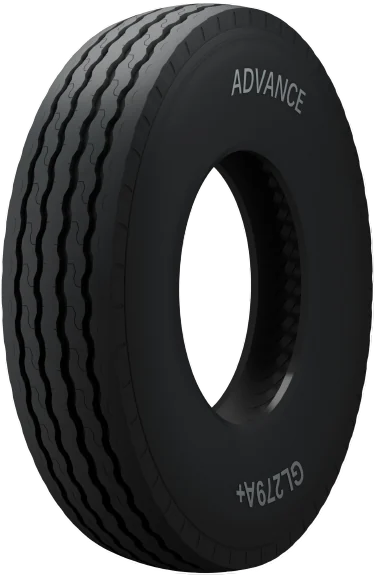
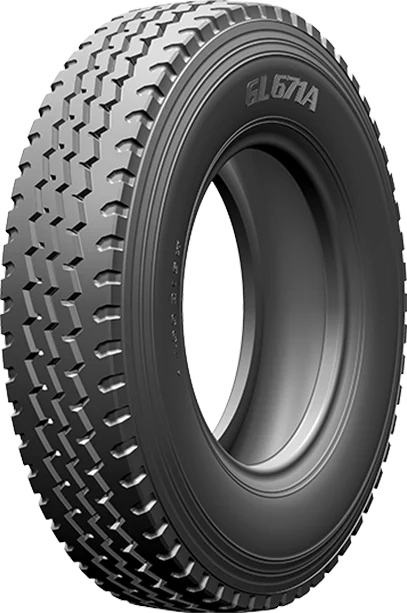
In everyday speech, "steel ply" or "zinc ply" means a radial tyre: the inner ply runs at right angles to the direction of rolling, with steel belt layers under the tread. "Fabric ply" means a bias tyre: several nylon or polyester plies are laid diagonally, each layer crossing over the one below.
In short: steel-belted radial tyres are smoother, run cooler and wear evenly, which suits long-distance vehicles. Bias (cross-ply) tyres have stiff sidewalls that handle impact and heavy loads at low speed, which suits construction vehicles, rollers and forklifts. Check the sidewall: an R means radial, a plain hyphen means bias.
How does the construction differ?
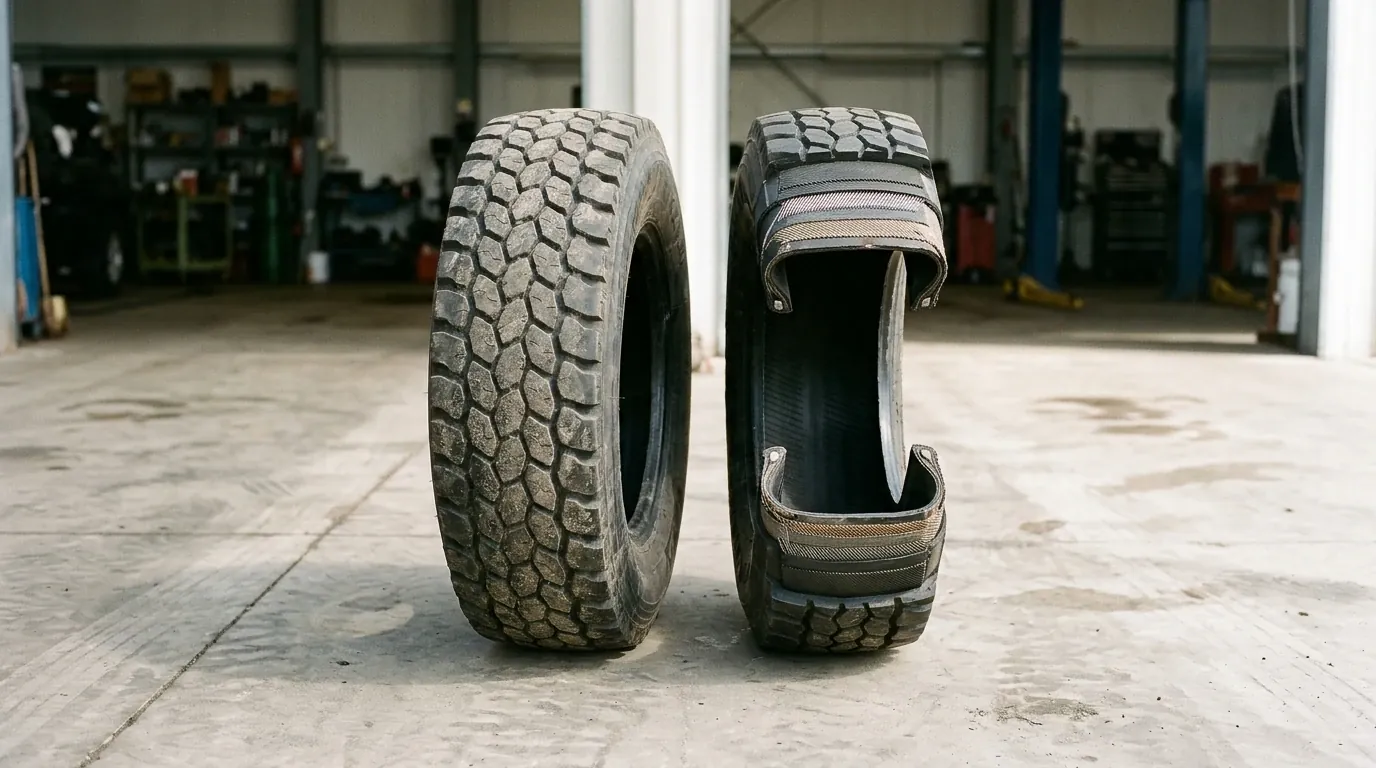
A radial tyre has a casing that is flexible sideways, and its tread is held flat by steel belt plies. The tread shifts little as it rolls, so it generates less heat and wears more evenly. A bias tyre has cross-laid plies stacked on top of each other, which makes the sidewall and tread stiff as one unit, but the sidewall flexes more as it rolls and so runs hotter. A detailed diagram is in the article what is a TBR tyre.
Pros and cons of steel-belted (radial) tyres
- Smoother: the flexible casing absorbs vibration well and reduces driver fatigue on long routes.
- Cooler: less heat build-up, suitable for continuous high-speed running.
- Even wear: the tread stays flat, so grip on the road is stable.
- Low rolling resistance: helps reduce fuel consumption on long routes.
- Drawback: the sidewall is thinner, so it is easier to tear on sharp rock, kerb edges or rough construction roads.
Pros and cons of bias (cross-ply) tyres
- Stiff sidewall: better resistance to impact and scuffing on rock and earth surfaces.
- Slow speed, heavy load: common on rollers, forklifts and low-speed construction vehicles.
- Drawback: runs hotter at speed, is less smooth, and is not suited to vehicles on continuous long-distance routes.
Quick comparison table
| Criteria | Steel-belted (radial) | Bias (cross-ply) |
|---|---|---|
| Plies | Radial, with steel belts under the tread | Nylon/polyester laid crosswise |
| Ride comfort | Smoother | Stiffer |
| Heat on long runs | Cooler | Hotter |
| Wear pattern | Even wear | Tends to wear quickly at high speed |
| Sidewall | Softer, more easily damaged by hard impact | Stiff, handles impact well |
| Size marking | Has an R, for example 11.00R20 | Hyphen, for example 11.00-20 |
| Commonly used for | Trucks, tractor units and coaches on long routes | Construction vehicles, rollers, forklifts, light trucks |
Identifying them on the sidewall: the letter R and the hyphen
The quickest way is to read the tyre size marking. Size 11.00R20 is radial; size 11.00-20 is bias. They share the same 20 inch rim diameter, but the construction is entirely different. How to read the other specifications (load index, speed rating, PR) is covered in the article how to read truck tyre specifications. A specific radial size can be seen on the 11.00R20 page.
When to choose steel-belted, and when to choose bias?
- Long routes, continuous running: choose radial. All 201 TBR products on the site are steel-belted radial; see TBR truck tyres.
- Construction, mining, rocky ground: depends on the level of impact and speed; see the guide how to choose mining and construction tyres.
- Rollers, forklifts, low speed: usually bias or industrial tyres; see choosing a tread for rollers and forklift tyres.
- Light trucks with low load: both types exist; follow the vehicle manufacturer's recommendation and the actual load.
Some bias sizes in the catalogue
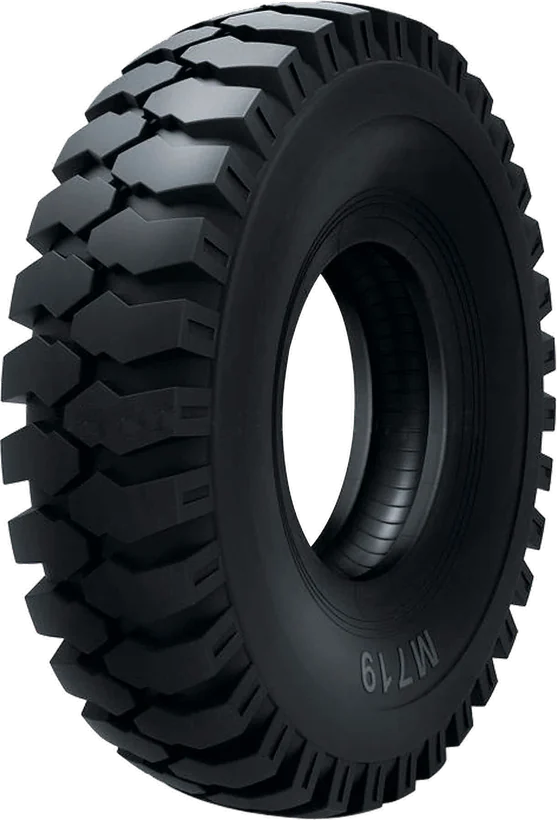
SAMSON and ADVANCE bias tyres are concentrated in light trucks, construction, rollers and forklifts. For example, ADVANCE 11.00-20 tread pattern M719 (18PR) has speed symbol B (50 km/h) and a pressure of 575 kPa. The same size 11.00-20 with tread pattern IND-3J (20PR) has speed symbol A5 (25 km/h) and a maximum load of 7,200 kg at 950 kPa, and leans towards industrial use. See also bias roller and grader tyres.
Mixing radial and bias on the same vehicle
Do not mix the two types on the same axle. Sidewall stiffness and steering response differ, so the vehicle can easily pull off line when braking or cornering. The safest approach is to use one type for the whole vehicle; if you must use both, ask the vehicle manufacturer or a technical department before fitting.
Send a quotation request
The website only presents products and receives quotation requests; it does not sell online. To get advice on radial or bias tyres suited to your vehicle, state the vehicle type, the size you currently use, the load and the route, then send it through the contact page.
Frequently asked questions
- Are "bo kem" tyres and steel-belted tyres the same thing?
- In everyday usage among mechanics and vehicle owners, "bo kem" and "steel-belted" both refer to radial tyres with steel plies/belts.
- What is a fabric-ply tyre?
- It is a bias (cross-ply) tyre, with several nylon or polyester plies laid crosswise and a stiff sidewall.
- How do I know whether my tyre is radial or bias?
- Read the tyre size on the sidewall: an R (as in 11.00R20) means radial; only a hyphen (as in 11.00-20) means bias.
- Which type should a long-distance vehicle use?
- Usually steel-belted radial, because it is smoother, cooler and wears more evenly in continuous running.
- Can a bias tyre be replaced with a radial of the same rim size?
- Usually yes, if the whole axle is replaced together and the load, pressure and rim are checked for suitability. Ask for technical advice or the vehicle manufacturer first.
Need a tyre quotation?
Send your sizes and quantities and our sales team replies with a project quotation within 24 working hours.
Sizes that match this guide
Add them straight to the quotation request and send once.