
How do tube-type and tubeless tyres differ?
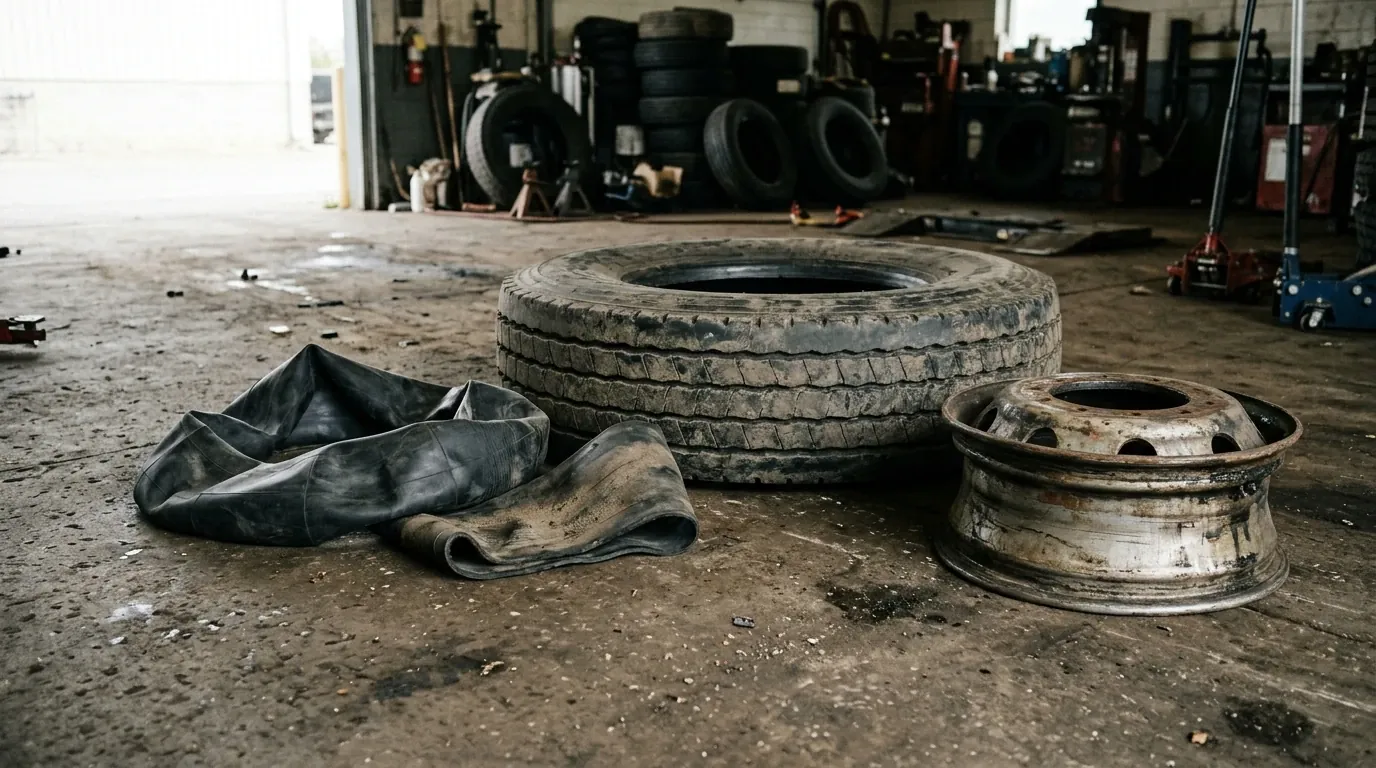
A tube-type tyre holds air with an inner tube placed inside, with a flap lining between the tube and the rim. A tubeless tyre holds air through a sealed inner liner and a bead pressed tight against the rim, so it needs no tube. The two have different constructions and need a suitable rim.
In short: a tube-type tyre needs a tube and flap, and goes with a conventional demountable rim. A tubeless tyre needs an airtight rim. Do not fit a tubeless tyre on a rim that is not airtight, and check the product page for the packaging type before ordering.
Quick comparison table
| Criteria | Tube-type (tube + flap) | Tubeless |
|---|---|---|
| Holds air with | Inner tube | Sealed liner and bead pressed to the rim |
| Accessories | Tube and flap | No tube or flap needed |
| Rim | Rim for tube-type tyres | Airtight rim, valve fitted on the rim |
| When punctured | The tube leaks; the tyre usually has to be removed to patch or replace the tube | Air usually escapes more slowly; repair from the inside of the tyre |
| Fitting | Many parts, easy to get the tube or flap folded wrongly | Fewer parts, but needs a rim and bead to the correct standard |
What TTF, TL, loose tyre and solid tyre mean on the product page
Every product page states the tyre type. Among the 303 products in the catalogue there are four groups:
| Symbol | Meaning | Number of products |
|---|---|---|
| TTF | Tyre + tube + flap set, packed together | 145 |
| TL | Tubeless tyre | 109 |
| TIRE | Loose tyre, without tube or flap | 38 |
| SOLID | Solid tyre | 11 |
Some sizes have two packaging options for the same specification: Tube and Flap Set or Loose Tyre. Choose Loose Tyre when you already have a tube and flap in good condition, or when you need to buy each part separately.
Which rim goes with which tyre type?
General knowledge: sizes with the .5 marking (19.5, 22.5, 24.5) are 5 degree rims and are usually used tubeless. 20 inch rim sizes such as 11.00R20 and 12.00R20 usually use a tube and flap. This is a common convention and not every vehicle is the same, so check the actual rim configuration. See the size pages 11R22.5, 12R22.5, 11.00R20 and 12.00R20.
When to use which?
- Use a tube-type tyre: the vehicle already has rims for a tube and flap, or sizes such as 11.00R20 and 12.00R20 in the current configuration.
- Use a tubeless tyre: the vehicle has airtight rims, for example tractor units commonly use size 12R22.5.
- Do not change type arbitrarily: switching from tube to tubeless needs checking and may require changing the rim.
For 20 inch rims, see the article 11.00R20 truck tyres. The general concept of this tyre family is in the article what is a TBR tyre.
Signs that show whether a tyre is tube-type or tubeless
- Check the tyre type entry on the product page: TTF means tube and flap, TL means tubeless.
- The sidewall usually carries the word TUBELESS on a tubeless tyre; a tube-type tyre is usually marked TUBE TYPE.
- Look at the valve: a valve fitted straight onto the rim means a tubeless system; a valve sticking out from the tube means tube-type.
- If still in doubt, send a photo of the sidewall and rim through the contact page.
Fitting the wrong type: consequences
- Tubeless tyre on a rim that is not airtight: air leaks at the bead and the vehicle gradually loses pressure.
- Tube of the wrong size or folded: the tube gets pinched and wears through early.
- Missing flap or flap of the wrong size: the rim rubs the tube and causes a puncture.
- Old tube patched in many places: replace it with a new one instead of continuing to patch.
Repairing tyres, patching tubes and replacing flaps
A small tube puncture can be patched with the correct technique, but a tube patched in many places or torn should be replaced. Replace the flap together with a new tube, because an old flap may have ridges that damage the tube. With a tubeless tyre, a puncture should be repaired from the inside of the tyre, not just plugged from the outside. After repair, check the pressure again following the article truck tyre pressure.
Send a quotation request
The website only presents products and does not sell online. When you need a quotation, state the tyre size, the type of rim currently used, and whether you want a tube and flap set or a loose tyre, then send it through the contact page. The full catalogue is at TBR truck tyres.
Frequently asked questions
- What is TTF?
- TTF is a set made up of a tyre, a tube and a flap, packed together.
- What is TL on the product page?
- TL is a tubeless tyre, fitted onto an airtight rim and needing no tube or flap.
- How do loose tyres differ from tube-and-flap sets?
- A loose tyre is the tyre only. A tube-and-flap set includes the tyre, inner tube and flap of the same specification.
- Can a punctured tubeless tyre keep running?
- Air usually escapes more slowly, but you should stop, inspect and repair it properly from the inside of the tyre before driving on.
- Can a tube-type tyre be replaced with a tubeless tyre?
- Only if the vehicle's rim is a suitable airtight type. Ask the technical team before changing.
Need a tyre quotation?
Send your sizes and quantities and our sales team replies with a project quotation within 24 working hours.
Sizes that match this guide
Add them straight to the quotation request and send once.